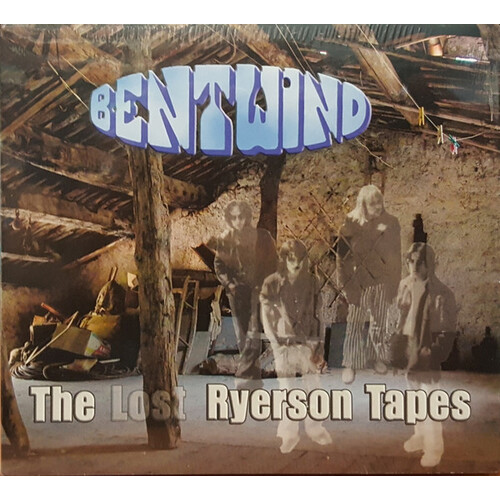
Insight
Sussex isn’t polished, and it doesn’t pretend to be. It’s the sound of four young guys in Toronto riding a wave of acid, feedback, and freedom, carving out their own space in the chaotic late-‘60s counterculture. Recorded on a shoestring budget at Sound Canada Studios, a small local facility known for giving underdog acts a shot, Sussex captures the ragged energy of a band more concerned with feeling than finesse—a record where spontaneity trumps precision, and the line between jam session and finished track feels deliberately blurred.
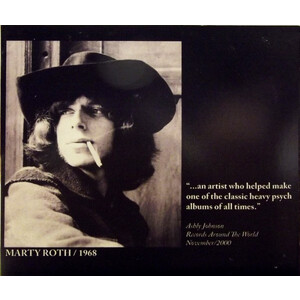
Bent Wind formed organically out of a swirl of friendships, chance meetings, and impromptu jams at 57 Sussex Avenue, a student-rented house in the city’s Annex neighbourhood that doubled as their headquarters and creative bunker. Guitarist/vocalist Marty Roth, guitarist Gerry Gibas, bassist Sebastian Pelaia, and drummer Eddie Thomas Majchrowski weren’t aiming for stardom—they were aiming to make noise, to chase grooves into oblivion, and to see where it all led. Between gigs at frat houses and hawking psychedelic candles at Rochdale College, they somehow managed to pull together enough cash (barely) to record eight tracks, live off the floor, in a whirlwind studio session that cost less than a grand.
Helping them capture the chaos was Merv Buchanan, a young engineer and producer who believed in the project enough to release it on his newly-formed Trend Records label. Buchanan worked fast and loose, tracking the entire LP in a single session and mixing it down with minimal overdubs. The result? A document that sounds exactly like what it was—a band in a room, turning up loud, letting the tape roll, and seeing what would stick.
The songs on Sussex move between heavy, acid-drenched rockers and dreamy, stoned-out ballads, often within the same song. “Mystify” and “Hate” are muscular and dense, built on fuzz-drenched riffs and echo-laden vocals that teeter between menace and trance. “Riverside” is one of the standouts—a hypnotic swirl of guitars and wah effects that somehow manages to sound both locked-in and about to fall apart. Then there’s “Look at Love,” a trippy ballad that aims for beauty but occasionally stumbles under the weight of its own psychedelic haze. Still, even its imperfections feel authentic—like everything else on Sussex, it’s a snapshot of a moment, not a product of careful revision.
One of the more fascinating aspects of Sussex is how the lyrics—often improvised or scatted in the studio—serve as another texture rather than a narrative. Roth later admitted that early versions of these songs didn’t even have proper words, just “skat gibberish” run through echo effects. And you can hear it—the vocals float, moan, and shimmer, more about mood than message. Nobody cared—it was all about the vibe.
While Sussex might have sounded like just another acid rock LP in 1969, over time it’s taken on a kind of mythic status. Maybe that’s due to the band’s disbandment shortly after its release, or the near-total absence of promotion or distribution. Or maybe it’s because this record genuinely feels like a time capsule—not of a scene, but of a handful of musicians stumbling through the haze of their youth, chasing the magic that happens when you hit “record” and see what emerges.
What’s more, Sussex has become the most valuable Canadian vinyl record in existence, with near mint originals selling for over USD$7,500—a staggering turn for an album that started in a rented house, was pressed in tiny numbers, and barely made a ripple upon release. But the appeal isn’t just rarity—it’s the rawness, the sincerity, and the unfiltered creativity that defines it.
Bent Wind wouldn’t resurface until the late ‘80s, when Roth resurrected the name for a surprise follow-up LP, again working with Merv Buchanan. But Sussex is the real relic—a raw, unfiltered document of Toronto’s psychedelic underground, equal parts ambition, experimentation, and accident. It’s not perfect, but it never wanted to be.
And honestly? That’s what makes it timeless.
-Robert Williston
Marty Roth: rhythm guitar, vocals
Gerry Gibas: lead guitar (tracks 1-1 to 1-14)
Michael George Jones: lead guitar (tracks 2-1 to 2-10)
Robert Brockie: lead guitar (track 2-1)
Sebastian Pelaia: bass (tracks 1-1 to 1-14)
Bill Miller: bass (tracks 2-1 to 2-10)
Eddie Thomas: drums (tracks 1-1 to 1-14)
John Butt: drums (tracks 2-1 to 2-3)
Stefciu Janicki: drums (tracks 2-1 to 2-10)
Harry Sharp: guest vocals (tracks 2-1 to 2-10)
Al Mills: cameo appearances (tracks 2-2, 2-3)
Written by Gerry Gibas (track 1-12); Marty Roth (tracks 1-11, 1-13, 1-14, 2-1 to 2-7, 2-9, 2-10)
All other songs written by Marty Roth and/or Gerry Gibas
Engineered by Merv Buchanan (tracks 1-1 to 1-14); and Sean Munavishi (tracks 2-1 to 2-10)
Recorded at Trend Records Inc. (tracks 1-1 to 1-10, 1-8, 1-9 in November 1969)
Rehearsal recordings at Ryerson Polytechnical Institute, March 1970 (tracks 1-11 to 1-14)
Living room recording, circa 1991 (track 1-15)
Recorded at Psychedrome Studios, Toronto (tracks 2-4 to 2-10, 2005)
From the LP The Fourth Line Is...You Will (1989) (track 2-1)
Live rehearsals, 1995 (tracks 2-2, 2-3)
Artwork by Paul Murton
Photography by Aleks Velde, Fran Chesnutt, and Nikals Andersson
Gallery
Images
5 images
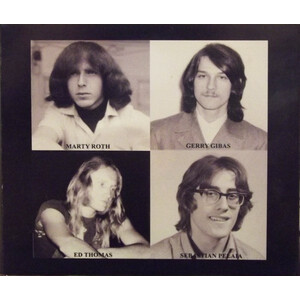
Bent Wind - The Lost Ryerson Tapes (5)
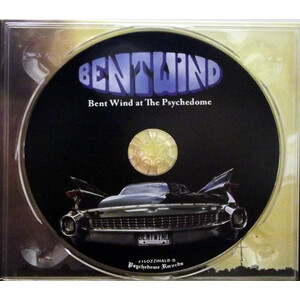
Bent Wind - The Lost Ryerson Tapes (2)
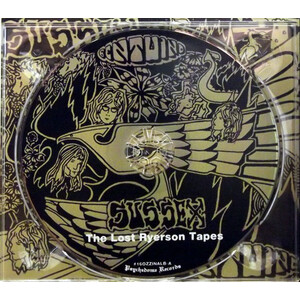
Bent Wind - The Lost Ryerson Tapes (3)
Bent Wind - The Lost Ryerson Tapes (4)
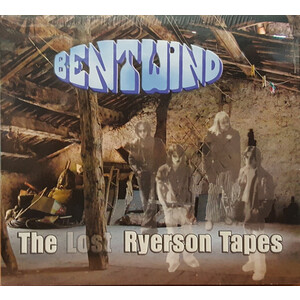
The Lost Ryerson Tapes
Media
Videos
0 videos
No videos available for this title.
Credits
In Transit
No Comments